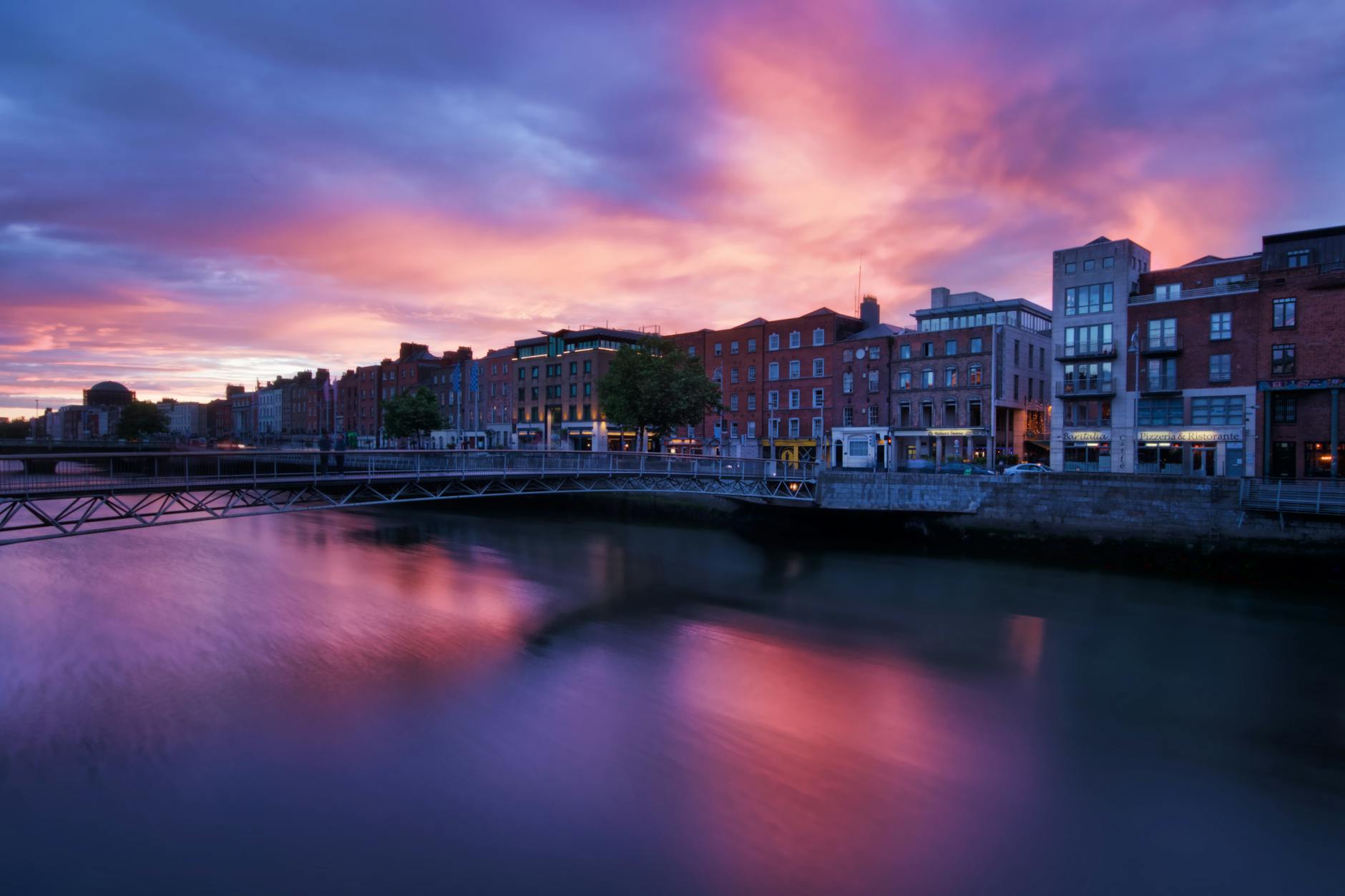
Dublin in Spring: What the Weather Is Really Like and Where to Stay

A practical month-by-month look at Dublin’s spring weather, crowd levels and room prices, with area picks for March, April and May so you book the right base.
What Dublin spring weather actually feels like
Spring in Dublin runs roughly from March to May, and the honest summary is: changeable. Days get noticeably longer through these months, which is one of the best reasons to visit — by late May you can still be walking around St Stephen’s Green at eight in the evening with plenty of light. Air temperatures are mild rather than warm, and sea air keeps things cool even when the sun is out.
Rain comes in short showers rather than all-day downpours. The running joke is that you get four seasons in an afternoon, and it is close to true. Locals carry a small umbrella or a waterproof jacket year-round and mostly ignore the forecast beyond a glance. A dry morning can turn wet by lunch and clear again by two, so plan loosely rather than cancelling anything.
Wind matters as much as rain, especially near the Liffey and around the open squares. A bright day in March can still feel sharp if the wind is up, so layers work better than a single heavy coat. Think a base layer, a jumper and a light rain shell you can shed and re-wear as the day shifts. Comfortable waterproof shoes beat trainers you care about.
March: quiet streets and the best room prices
Early March is the quietest stretch of the whole season. St Patrick’s Day, on 17 March, is the obvious exception — the city centre fills for the parade and the long weekend around it, and hotel rates spike across the middle of the month. If you are not coming for that, book either the first week or the last ten days of the month and you get a much calmer city.
Outside the festival weekend, this is when Dublin’s hotels are most willing to negotiate and offer their lowest rates of the spring. Expect cooler temperatures and a higher chance of rain than in May, so build more indoor time into the plan — the museums, the covered markets, a long pub lunch — and treat outdoor sightseeing as a bonus when the sky cooperates.
Days are still on the short side at the start of the month, so front-load your walking plans and save the indoor things for late afternoon. Trinity College’s grounds, the Georgian squares and the canal towpaths are all pleasant in crisp, quiet air with far fewer people in your photos than you would get in summer.
April: the sweet spot for most visitors
April is often the best spring month for a city break: the clocks have gone forward, daylight stretches well into the evening, temperatures edge up, and the crowds have not yet reached summer levels. Hotel prices sit comfortably below the peak of June to August, and you can usually find better value in the central areas than you would in high season.
The trade-off is unpredictability. April showers are real, so a plan that mixes indoor and outdoor stops works best. Do your long walk or park visit in the morning, keep an indoor option nearby for when the sky changes, and leave the evening flexible. Booking one or two things in advance rather than a packed schedule takes the stress out of the weather.
This is a good month for the areas on the edge of the centre — Rathmines, Ranelagh and Ballsbridge all feel relaxed in spring, with quieter residential streets and easy transport back into town. If you want a base that is leafy and calm by night but a short trip from the main sights by day, April is when those neighbourhoods show their best side.
May: long evenings and busier weekends
May brings the best light of the season and the longest evenings, which changes how you spend your days. You can do a full day of sightseeing and still have time for a walk along the Grand Canal or through the Georgian squares after dinner. Cafes and pub gardens start to feel properly alive, and the city has a settled, comfortable energy.
Crowds build through the month, especially at weekends and on any bank holiday. Room rates climb accordingly, and the most central hotels in Temple Bar and around Grafton Street book out earlier than in March or April. If your dates are fixed to a weekend in May, reserve accommodation several weeks ahead rather than leaving it late.
Weather in May is usually the most reliable of the spring months, though you should still pack for showers. Warm afternoons can be followed by a cool evening, so bring something with sleeves for sitting outside. It is also a good month for day trips out of the city — the longer days mean you can go further and still be back before dark.
Where to stay: matching the area to the season
For a first spring visit, the areas around Grafton Street and St Stephen’s Green put you within walking distance of the main sights, the parks and plenty of places to eat, which matters when the weather is changeable and you want to duck indoors quickly. The Trinity College Area is similarly central and quiet at night, with easy access on foot to most of the centre.
If value is the priority, especially in March or early April, look just outside the core. Rathmines and Ranelagh offer residential calm, good local restaurants and a short bus or tram ride into town. The Liberties and Smithfield are close to the centre, often priced below the Grafton Street area, and have a strong local character with markets and pubs of their own.
For a quieter, more formal feel, Georgian Dublin around Merrion Square suits travellers who like wide streets and period architecture, while Ballsbridge is leafy and good for a calmer stay with easy links back in. Docklands works well for modern hotels and business travel. Temple Bar and O’Connell Street are the most central but also the liveliest at night — check what you want from evenings before booking.
Packing, booking and a realistic daily plan
Pack for layering: a waterproof outer layer, a warm mid-layer and comfortable shoes you do not mind getting damp. An umbrella is worth having but a hooded jacket copes better with wind. Bring sunglasses too — bright spring days happen, and the low sun off the Liffey can catch you out. A small day bag for shedding layers as the day warms up is genuinely useful.
Book accommodation as early as your dates allow, particularly for the St Patrick’s Day period in March and any weekend in May. Compare total prices rather than headline rates, since breakfast and cancellation terms vary a lot. Ask your host directly about quieter rooms if you are near Temple Bar or O’Connell Street, as street noise is the most common complaint in the busiest central spots.
A realistic spring day mixes one anchor activity with flexible walking. Start outdoors while the light is good, keep a museum or covered market as a backup, and leave the late afternoon free for a park or a canal walk. Check opening hours on the day rather than assuming — some smaller sights run reduced spring hours — and confirm any restaurant you have your eye on, as popular places fill quickly even outside summer.
Before you book
What people ask before booking Temple Bar.
Yes, for most travellers. April and May offer longer days, milder temperatures and lower prices than the summer peak, with fewer crowds than June to August. March is quieter still and cheapest outside the St Patrick’s Day weekend, but cooler and wetter. The main thing to accept is changeable weather, so plan flexibly and pack layers.
Expect frequent short showers rather than constant rain. Spring days often mix sun, cloud and a passing shower or two, and a wet morning can clear by afternoon. A light waterproof jacket and shoes you do not mind getting damp matter more than a heavy coat. Check the forecast each morning but do not plan your whole trip around it.
St Patrick’s Day is 17 March, and the celebrations usually run over a long weekend around it. Central hotel rates rise sharply for those dates and the best rooms book out early. If you are not coming for the festival, either book well ahead for that period or choose dates in early or late March, when prices and crowds drop noticeably.
For a first visit, the Grafton Street and St Stephen’s Green areas are hard to beat: central, walkable to the main sights, and easy to retreat from when it rains. For better value, look at Rathmines, Ranelagh, the Liberties or Smithfield, all a short trip from the centre. Temple Bar and O’Connell Street are the most central but also the liveliest at night.
Pack layers rather than one heavy coat: a base layer, a warm jumper, a light waterproof shell and comfortable waterproof shoes. Add an umbrella for calm showers and sunglasses for bright days. A small day bag helps you shed and re-add layers as the temperature shifts. Evenings in March and April can feel cool, so bring something with sleeves.
Yes. By late May there is daylight well into the evening, so you can sightsee all day and still take a walk along the canal or through the Georgian squares after dinner. It is the best spring month for outdoor time and for day trips out of the city, though weekends get busier and rates rise, so book accommodation early.