O’Connell Street
Dublin’s widest, busiest street: grand monuments, department stores and the quickest transport links to everywhere else in the city.
 O’Connell Street
Why people stay in O’Connell Street
O’Connell Street is Dublin’s main artery, running roughly north to south from Parnell Square down to the River Liffey at O’Connell Bridge. It sits right in the middle of the city centre, so almost every bus route, the Luas tram lines and many walking routes pass through or near it. The street is wide by Dublin standards, lined with a mix of grand old buildings, statues, chain shops and a few landmark monuments, including the O’Connell Monument at the bridge end and the Spire of Dublin, a tall stainless-steel needle that stands where Nelson’s Pillar once was. It is not the prettiest street in the city, but it is hard to avoid and genuinely useful as a base.
This area suits people who want maximum convenience and transport above atmosphere, and travellers who value being able to walk to most of central Dublin within twenty minutes. It is a good choice for first-time visitors who want to orient themselves quickly, and for anyone arriving late who wants a hotel near the bus and tram network. It suits less well anyone looking for quiet evenings, cobbled lanes or a neighbourhood feel, and it is not the area for you if you want a calm residential base. It is busy, sometimes noisy, and more functional than charming.
By day O’Connell Street is a working street: shoppers heading for the department stores, office workers cutting through, tour buses, and people queuing for buses. The pavements are wide but crowded at peak times. In the evening the character changes: the shops close, the buses thin out, and the street gets quieter and a bit bleak in stretches, with fast-food places and a few late bars. It is not a nightlife destination in itself, but it is a short walk from the livelier parts of the centre. Lighting and footfall vary block by block, so it is worth knowing which end your hotel is on.
The street is defined by its monuments and civic buildings more than by its shops. The Spire is the obvious meeting point and landmark, and the O’Connell Monument and the statues along the median give the street its scale. The General Post Office, with its classical portico, is the building most people stop to look at. Side streets lead east towards Marlborough Street and west towards Moore Street, where you find a covered street market that has been trading for generations. Parnell Square at the north end opens into the Garden of Remembrance and the Hugh Lane gallery nearby, which gives the top of the street a quieter, greener edge.
Food on O’Connell Street itself is mostly quick and practical: fast food, cafés, bakery chains and a handful of sit-down restaurants. For something better, walk five minutes west to Moore Street for the market and the surrounding streets, where you find old-school shops and casual eateries, or head south across the bridge into Temple Bar and the areas around Grafton Street for a wider choice. Locals tend not to eat on the street itself but use it as a route to somewhere else. Expect a decent lunch for around €10-18 and a casual dinner for €15-25, with hotel restaurants charging more.
Dublin’s weather is mild and changeable, with rain possible in any month and the wettest spells generally in autumn and winter. O’Connell Street is exposed and windy, especially near the bridge, so an umbrella and a warm layer help whatever the season. Spring and early summer are the most comfortable times to walk it, and December brings Christmas lights and heavier crowds. Summer evenings are bright until late, which makes the walk south along the river pleasant. If you are sensitive to noise, ask for a room away from the street side, since traffic runs late.
Prices along O’Connell Street sit in the middle of the Dublin range. Hotels here are often slightly cheaper than around Grafton Street or St Stephen’s Green, especially the larger chain properties, but they rise sharply during big events and in high season. Expect mid-range rooms roughly €130-220 a night in normal periods and more in summer or around major dates. Food and drink are moderate for the city centre, with cheaper fast food and cafés alongside hotel bars. Public transport is the real saving: a Leap card makes buses and trams cheaper than paying cash for single fares.
Before you arrive, know that O’Connell Street is split by a central median and the two sides feel different, so check which side your hotel is on. Some stretches are scruffier than the postcard image, and the street can feel rough late at night, so stick to well-lit routes. The Luas has two separate lines that do not connect here, so check which one you need. Many buses stop on the street but routes and stops change, so confirm with your hotel. Booking direct often gets you a better rate and a quieter room, and asking for a higher floor helps with street noise.
The best places to stay around O’Connell Street are the quieter side streets rather than the street itself. North of the river, the blocks around Parnell Square and the upper end of the street give you the transport links without the full traffic noise, and the area towards the Garden of Remembrance is calmer in the evening. South of the bridge, the streets running towards Temple Bar and the river are livelier and handy for nightlife, but noisier at weekends. Hotels here range from large chain properties and budget-friendly city hotels to a few older, characterful buildings; most are practical rather than luxurious. Expect mid-range rooms roughly €130-220 a night outside peak periods, with budget options below that and prices climbing in summer and around big events. If quiet matters, request a room at the back or on a higher floor and away from the tram line, since trams and buses run late. Booking direct is usually worth it for a better rate and a specific room request.
Things to do in O’Connell Street

The Spire of Dublin is the easiest landmark to find and a natural meeting point, standing where Nelson’s Pillar once was. Walk the median to see the O’Connell Monument near the bridge and the statues along the way, which give the street its scale. It is free and takes about twenty minutes at an easy pace. Go early morning or in the evening for fewer crowds and better photos, and bring a jacket because the street is exposed and windy near the river.

The General Post Office is the classical building with the columned portico on the west side of the street, and it is the most striking piece of architecture here. Step inside to see the public hall, and take a moment outside to read the building’s place in Irish history on the plaques. It is a working post office, so visit during opening hours and keep quiet in the public areas. Allow fifteen to twenty minutes, and combine it with a walk down to the bridge.

A short walk west of O’Connell Street, Moore Street has a long-running street market with fruit, vegetables, flowers and household goods. It is a slice of everyday Dublin rather than a tourist attraction, which is exactly why it is worth a look. Go in the morning when stalls are fullest, bring small change, and be ready to move with the crowd. Allow half an hour, and use it as a starting point for exploring the surrounding old streets.

O’Connell Bridge is wider than it is long and gives you one of the best free views in the city, looking down the Liffey towards the Ha’penny Bridge and the docklands. Walk it at dusk when the river lights come on and the traffic eases. It takes ten minutes, but linger on the north bank for the classic view south. Bring a camera, and watch for cyclists in the bike lanes as you cross.
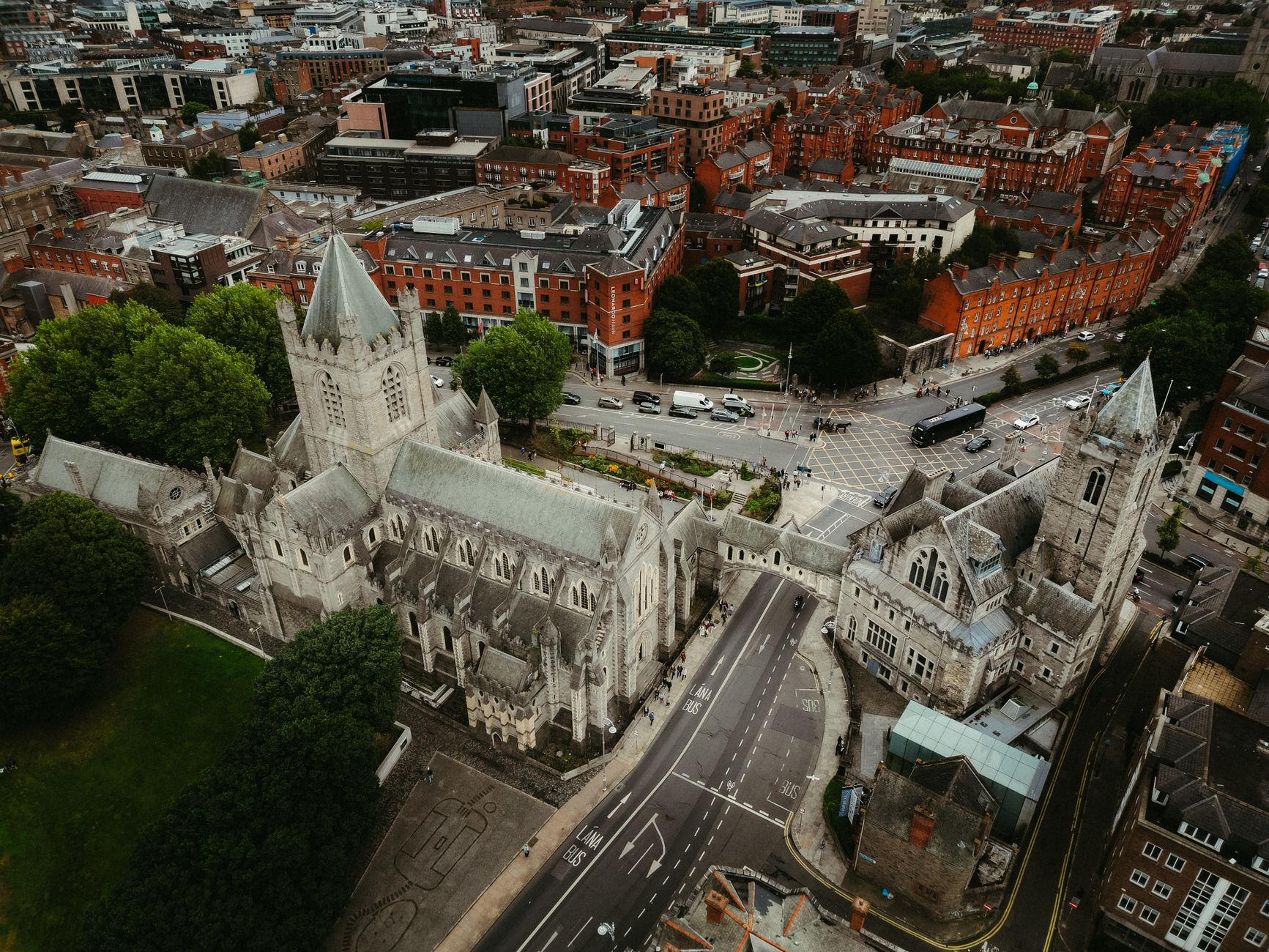
At the top of O’Connell Street, Parnell Square opens into the Garden of Remembrance, a quiet green space with a reflecting pool and a striking sculpture. It is a calm contrast to the traffic and a good place to sit for a few minutes. Entry is free and it is open during daylight hours. Pair it with a look at the surrounding Georgian terraces on Parnell Square, which hint at the grander city this street once was.

Just off Parnell Square, the Hugh Lane Gallery holds a noted collection of modern and Irish art, including a reconstructed studio of Francis Bacon. It is a short walk from the top of O’Connell Street and makes a good rainy-day stop. Check opening times before you go, as they vary by day, and allow about an hour. It is quieter than the big city-centre attractions, so it suits anyone who wants art without the crowds.
What to see
Hotels near O’Connell Street
No hotels are listed in O’Connell Street yet. The nearest ones are on the region page.


Every hotel we cover in O’Connell Street
- Hotel 7 Dublin 3★ · 4.7/5
- Point A Dublin Parnell Street 3★ · 4.5/5
- Temple Bar Inn 3★ · 4.5/5
- Holiday Inn Express Dublin City Centre by IHG 3★ · 4.4/5
- Dergvale Hotel 2★ · 4.4/5
- Cassidys Hotel 4★ · 4.3/5
- Castle Hotel 4★ · 4.3/5
- Riu Plaza The Gresham Dublin 4★ · 4.3/5
- Temple Bar Hotel Dublin by The Unlimited Collection 4★ · 4.3/5
- The Fleet 4★ · 4.3/5
- The Morgan Hotel 4★ · 4.3/5
- Harry Clarke Mews at the Castle Hotel 3★ · 4.3/5
- Sonder Mountjoy Square 3★ · 4.3/5
- Barry’s Hotel 2★ · 4.3/5
- Dublin One Hotel 4★ · 4.2/5
- Arlington Hotel O’Connell Bridge 3★ · 4.2/5
- Belvedere Hotel Dublin City Centre 3★ · 4.2/5
- Leonardo Hotel Dublin Parnell Street 4★ · 4.1/5
- Academy Plaza Hotel 3★ · 4.1/5
- Hotel St. George by Nina 3★ · 4.1/5
- Abbey Dublin Hotel 2★ · 3.6/5
- The Gate Hotel 1★ · 3.3/5
- Lynams Hotel 3★ · 3.1/5
- Central Apartment Private patio reliable fast WIFI 4★
Getting around O’Connell Street
O’Connell Street is the easiest place in Dublin to reach by public transport, which is a big part of why people stay here. From Dublin Airport, the most straightforward options are the airport coaches that run to the city centre and taxis; the journey by road is typically thirty to forty-five minutes depending on traffic, and coaches drop near the street or a short walk away. Several bus routes converge on the street, and the two Luas tram lines cross the city nearby, though they are separate lines that do not connect at O’Connell Street itself, so check which one you need. Taxis and ride-hailing apps are easy to flag by day but can be slow at peak times. Driving is not advisable in the centre: parking is limited and expensive, so use a car park on the edge and walk or take the tram. Once here, everything central is walkable, with Grafton Street about fifteen minutes south and Temple Bar ten minutes across the bridge. A Leap card makes buses and trams cheaper than cash fares, and journey times across the centre are short, though traffic can slow buses at rush hour.
Questions about O’Connell Street
It is a practical base rather than a pretty one. You get the best transport links in the city, most central sights within a twenty-minute walk, and hotel prices that are often a little lower than around Grafton Street. The trade-off is noise and a busy, functional street rather than a charming neighbourhood. If you want convenience and plan to be out exploring all day, it works well. If you want quiet evenings and cobbled lanes, look at the side streets or another area.
Both are short walks. Temple Bar is about ten minutes south across O’Connell Bridge and along the river. Grafton Street is roughly fifteen minutes south, crossing the bridge and continuing up through the shopping streets. The route is flat and easy to follow. If you are tired or it is raining, the Luas trams run nearby, though you may find walking just as quick for these distances.
The side streets rather than the street itself are better for sleep. North of the river, the blocks around Parnell Square are calmer in the evening while keeping the transport links. South of the bridge is livelier and handier for nightlife but noisier at weekends. Whichever side you choose, ask for a room at the back or on a higher floor and away from the tram line, since traffic and trams run late.
The street is more about landmarks than attractions. See the Spire, the O’Connell Monument and the statues along the median, and look at the General Post Office. The Moore Street market is a short walk west, and the Garden of Remembrance and the Hugh Lane gallery are at the top near Parnell Square. Most people treat the street as a route to somewhere else, so plan a couple of hours rather than a whole day.
It is a busy city-centre street, and like any busy street it varies block by block. By day it is crowded and straightforward. In the evening the shops close and some stretches get quiet and a little bleak, so stick to well-lit routes and the busier parts. Ask your hotel which streets they recommend for walking back at night, and use taxis or the tram for longer hops if you are unsure. As anywhere, keep an eye on your belongings in crowds.