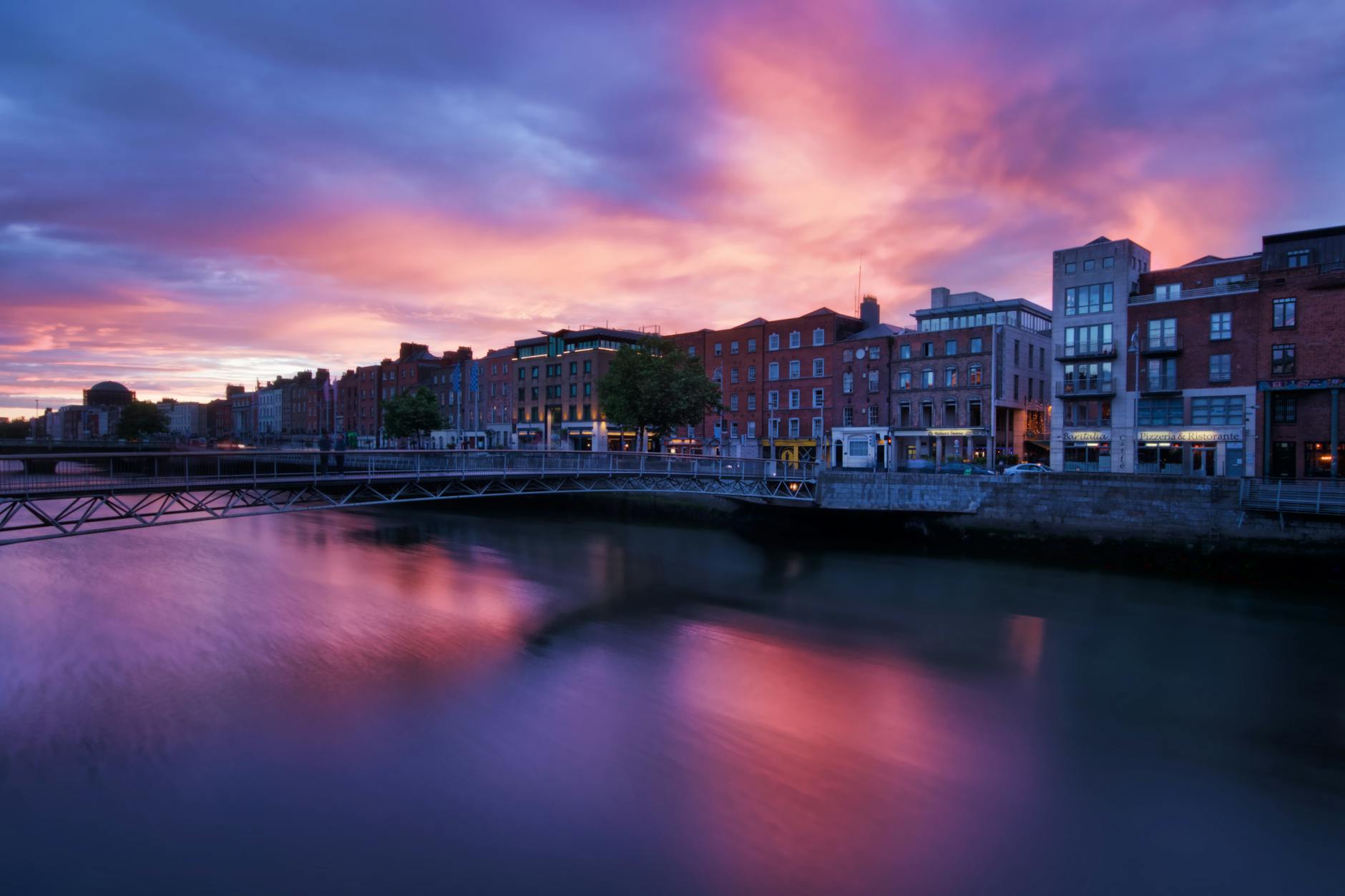
Trinity College Area Hotels: Staying in the Heart of Dublin

What to expect from hotels around Trinity College, from room types and real price patterns to noise, transport and which streets suit couples, families and solo travellers.
Where the Trinity College area actually begins
The Trinity College area is the pocket of central Dublin south of the River Liffey, built around the university’s front gates on College Green. Practically, it stretches from Dame Street and College Green east towards Merrion Square, and south to the edge of St Stephen’s Green. The campus itself sits in the middle; hotels cluster on the surrounding streets and on the quieter side roads running towards the Liffey.
This is one of the most compact places to stay in the city. From most hotels here you can walk to O’Connell Street in about ten to fifteen minutes, to Grafton Street in under five, and to the Docklands in around twenty. That walkability is the main reason people choose it, and the main thing that drives room rates.
It is not a quiet residential area. Trinity brings students, bus routes, tour buses on College Green and a steady flow of pedestrians from morning to late evening. If you want calm, look at the streets further east near Merrion Square rather than directly on Dame Street or College Green.
What the hotels are like and how rooms are named
Expect a mix of mid-range chain hotels, a handful of smaller independents and some older buildings converted into guesthouses. Rooms vary more than the photos suggest: a "double" may be a small city double in an older building or a modern standard room in a newer block. Always check the stated room size in square metres if it is listed, and ask directly if a room faces the street.
Most hotels in this pocket are three or four star by Irish standards. You are paying for location, so expect compact rooms, limited wardrobes and bathrooms that are functional rather than generous. Breakfast is usually offered as a buffet or a set menu; some smaller places only do a continental spread. Ask your host what is included before you book a rate without breakfast.
For longer stays, serviced apartments and aparthotels sit on the edges of the area towards Merrion Square and the Docklands. These suit families and anyone staying a week, since you get a kitchenette and more space, though you trade the hotel desk and daily housekeeping for a self-catering setup.
Honest price patterns through the year
Rates here move sharply with demand. Midweek in January and February is the cheapest window; expect roughly the lower end of the city’s mid-range band. Weekends from May to September, and any weekend with a big event at the university or a match at the nearby stadiums, push prices up noticeably.
As a rough guide, a standard double in a three-star hotel in this area might run from around EUR 120 to EUR 180 (about USD 130 to USD 195) on a quiet midweek night, and EUR 200 to EUR 320 (about USD 215 to USD 345) on a busy summer Saturday. Four-star rooms commonly start higher. Treat these as patterns, not quotes, and check the booking page for the actual dates.
Rates also rise during graduation and exam periods at Trinity and around major city events. If you have flexibility, shifting your stay by one or two nights can make a real difference. Booking directly with the hotel sometimes gets you a better cancellation policy, even if the headline rate is not the lowest.
Noise, sleep and which side of the building to ask for
Street-facing rooms on Dame Street, College Green and the busier cross streets pick up traffic, delivery vans early in the morning, and late-night revellers heading home from Temple Bar. If you are a light sleeper, ask for a room at the back of the building before you arrive, not at check-in.
Older buildings often have single glazing and thin internal walls. A courtyard-facing room is usually quieter but may have less light. If air conditioning matters to you in summer, confirm it exists; many older Dublin hotels rely on opening windows, which brings the street noise back in.
Bring earplugs as a backup. And if you are sensitive to morning light, note that some rooms in converted Georgian buildings have small windows or heavy shutters, which is worth asking about if you like a bright room.
Getting around without a car
You do not need a car here. The Luas tram lines cross the city nearby, and the green line stops around the St Stephen’s Green and Dawson Street side. Dublin Bus routes run along Dame Street and College Green, and the Airlink and other airport coaches stop within walking distance of most hotels in the area.
Heuston Station for intercity trains is a short tram or taxi ride west along the river. Connolly Station for northern and western rail routes is about fifteen to twenty minutes on foot towards the Docklands. For taxis, your hotel desk can call one, and ride-hailing apps work normally.
If you do drive, check parking before booking. On-street parking in this area is metered and limited, and hotel parking, where it exists, is often a paid multi-storey nearby rather than on site. Ask your host for the exact arrangement and the daily rate.
Eating and drinking around the university gates
The area suits people who want options on the doorstep. Grafton Street and its side lanes are a few minutes south for cafes, bakeries and casual lunch spots. Dame Street and the streets towards Temple Bar have pubs and restaurants that run from cheap and cheerful to smarter evening places.
For a quieter meal, head east towards Merrion Square and Baggot Street, where there is a good spread of neighbourhood restaurants. Breakfast near Trinity is busy on weekday mornings with students and office workers, so expect queues at the most popular cafes between about eight and nine thirty.
If you are self-catering, small convenience stores are everywhere, and there are larger supermarkets within a short walk towards the city centre. Ask your host which one is closest to your building; it saves a lot of wandering on your first evening.
Who this area suits, and who it does not
It suits first-time visitors who want to walk to the main sights, solo travellers who value being central and back before dark, and couples who would rather spend on location than on a large room. It also works for short business trips, given the proximity to offices around Merrion Square and the Docklands.
It is less ideal for families needing space and quiet, or for anyone with a car and a tight budget for parking. If you want a slower pace, Rathmines, Ranelagh or the streets around Merrion Square give you more breathing room while still being a short bus or tram ride from the centre.
A practical compromise is to split a longer trip: a few nights here for the sights, then a few nights in Ballsbridge or Ranelagh for a quieter base. The city is small enough that you are never far from anything, and you get a better sense of how Dublin actually lives.
Before you book
What people ask before booking Docklands.
Yes, for most first-timers it is one of the most practical bases. You can walk to Trinity, Grafton Street, O’Connell Street, Temple Bar and St Stephen’s Green in under twenty minutes, and bus and tram connections are close. The trade-off is street noise and compact rooms, so ask for a back room if you sleep lightly.
It depends heavily on dates. As a rough pattern, a three-star double might be around EUR 120 to EUR 180 (about USD 130 to USD 195) on a quiet midweek night and EUR 200 to EUR 320 (about USD 215 to USD 345) on a busy summer weekend. Four-star rooms run higher. Always check the rate for your exact dates.
The worst of it stays in Temple Bar itself, but streets like Dame Street and College Green carry late-night foot traffic and early deliveries. A room at the back of the building makes a big difference. Ask before you arrive and pack earplugs as a backup, especially for Friday and Saturday nights.
Some do, but often as a paid arrangement with a nearby multi-storey rather than on-site parking. On-street spaces are metered and hard to find. If you are driving, ask your host for the exact parking arrangement and daily rate before booking, and consider leaving the car behind since the area is easy to explore on foot.
Airport coaches and the Airlink service stop within walking distance of most hotels in the area, and the journey typically takes around thirty to forty-five minutes depending on traffic. A taxi is quicker outside peak hours but costs more. Ask your hotel which stop is closest to the building.
It is workable but not the easiest choice. Rooms are often compact, streets are busy and noise can disturb early bedtimes. Families usually do better in Ballsbridge or Ranelagh, or in a serviced apartment towards Merrion Square where there is more space and a kitchenette. If you stay central, request a quiet room away from the street.