George’s Street Arcade and Cow’s Lane Market
A red-brick Victorian market hall of small shops, plus a weekend design and food market in the lane behind it — browsing that costs nothing.
 George’s Street Arcade and Cow’s Lane Market
What to expect at George’s Street Arcade and Cow’s Lane Market
George’s Street Arcade is a covered market hall running between South Great George’s Street and Drury Street, just south of Temple Bar. Built in the 1880s in red brick, it has a high glass roof, two rows of small units, and a mix of vintage clothing, jewellery, prints, books, records and cafes. Behind it, Cow’s Lane leads towards Temple Bar, and on weekends a small outdoor market sets up there with design stalls and food. Neither is a major sight; both are a pleasant half-hour of browsing.
A visit is unhurried. You walk in from the street, the noise drops under the glass roof, and you move stall to stall. It is the kind of place where you find a second-hand leather jacket, a screen print of the Liffey, or a coffee and a pastry at a counter. Cow’s Lane Market, when it runs, is smaller and weather-dependent — a few tents with ceramics, prints and hot food. Allow 30 to 60 minutes for both, longer if you like vintage shops.
The arcade is one of Dublin’s surviving Victorian covered markets, a type of building that once dotted the city. Its red-brick front and glass roof have been restored, and it still functions as a market rather than a museum. Cow’s Lane takes its name from the old cattle route that ran here before the city expanded. Together they mark the edge of the old medieval city and the start of the shopping streets that lead to Grafton Street.
Start at the South Great George’s Street entrance, walk the length of the arcade, then exit onto Drury Street and loop back through Cow’s Lane. That takes about 45 minutes at a browse. If you are shopping seriously for vintage or prints, give it an hour and a half. Combine it with a walk up to Grafton Street or across to Temple Bar — both are within ten minutes on foot.
Weekday mornings are quietest, with many units still opening around 10:00. Saturday is the busiest day, especially if the Cow’s Lane market is running, but it also has the most stalls and the best atmosphere. Sunday is shorter and some units close. If you want photographs of the glass roof and empty aisles, go on a weekday just after opening.
There are cafes inside the arcade and on Drury Street, plus several coffee shops on South Great George’s Street. Toilets are limited — use a cafe you are buying from. Nearby, Dublin Castle and City Hall are a few minutes' walk, as is Temple Bar. Grafton Street’s shops are ten minutes north-east. The area is compact, so this fits easily into a shopping or sightseeing day.
Entry is free and you only pay for what you buy. Opening hours vary by unit, so expect some stalls to be closed early or on Sundays. The arcade has level access from both entrances, though individual units may have steps. Cow’s Lane Market is outdoors and runs on selected weekends — check locally or ask your host, as it is not guaranteed every week. Bring a reusable bag if you plan to shop.
Questions about George’s Street Arcade and Cow’s Lane Market
Yes. There is no admission charge; you walk in from either South Great George’s Street or Drury Street and browse. You only pay for what you buy from the individual units. Cow’s Lane Market, when it runs, is also free to walk through. Budget for coffee or a small purchase rather than an entry fee.
It is a weekend market and does not run every week, so check locally or ask your host before planning around it. When it does run, expect a small cluster of design, craft and food stalls in the lane behind the arcade. Weekday visits should focus on the arcade itself, which has permanent units with more reliable hours.
The mix changes, but typically you will find vintage clothing, jewellery, prints and posters, books, records, and small gifts, plus cafes. It is not a food market in the traditional sense. If you are looking for something specific, browse first and ask stallholders — many are makers or dealers who can tell you what else is nearby.
The arcade has level entrances from both streets and a flat floor, which makes it easy for wheelchairs and pushchairs. Individual units vary, and some have steps or narrow doorways. Cow’s Lane is an outdoor lane with a slightly uneven surface. If accessibility is a concern, the arcade itself is the more straightforward visit.
Allow about 30 to 45 minutes for a relaxed browse of the arcade and lane, or up to 90 minutes if you are seriously shopping for vintage or prints. It is a compact stop rather than a half-day attraction. Most visitors pair it with Dublin Castle, Grafton Street or a walk through Temple Bar.
Yes, it is an easy, low-cost stop for families — there is no entry fee and plenty to look at. The arcade is covered, which helps on a wet day. Keep an eye on children near the stalls, as some stock is fragile. Cafes inside and nearby make it a convenient break during a day of sightseeing in the city centre.
Hotels near George’s Street Arcade and Cow’s Lane Market
Every hotel we cover in Grafton Street
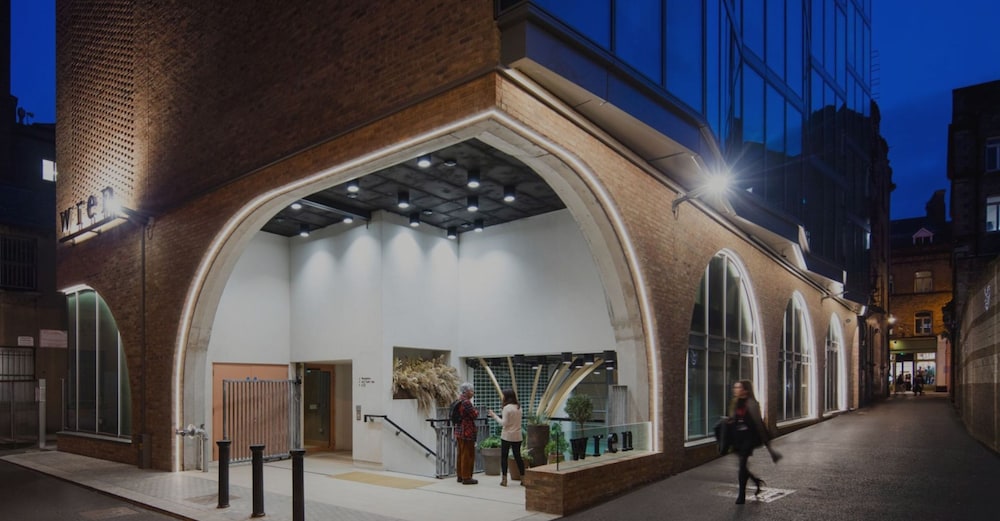
- Wren Urban Nest 4★ · 4.5/5 · 0.2 km away
- Grafton Street District Apartments 4★ · 0.2 km away
- Blooms Hotel 3★ · 3.8/5 · 0.3 km away
- Grafton Street Apartment 3★ · 0.4 km away
- Annebrook House Hotel 4★ · 4.5/5 · 5960 km away
- Trim Castle Hotel 4★ · 4.4/5 · 5960 km away
More things to do
All things to do


From the journal
All posts Neighbourhoods
Temple Bar vs Grafton Street: Which Dublin Area Should You Stay In?
Two central Dublin areas with very different rhythms. This comparison covers noise, room types, price expectations, transport and who each one actually suits for a short stay.
 Budget
Where to Stay in Dublin on a Budget: Honest Prices and What You Actually Get
A practical guide to Dublin’s cheaper beds, from dorms to budget guesthouses, with realistic nightly ranges, the trade-offs to expect, and the areas where your money goes furthest.
 Budget
Dublin Hotel Prices by Area: A Month-by-Month Guide
How hotel rates in Dublin’s key areas swing across the year, with practical timing tips and realistic budget ranges for each season.