Georgian Dublin (Merrion Square)
Grand 18th-century squares, red-brick townhouses and a calm, grown-up base minutes from Grafton Street.
 Georgian Dublin (Merrion Square)
Why people stay in Georgian Dublin (Merrion Square)
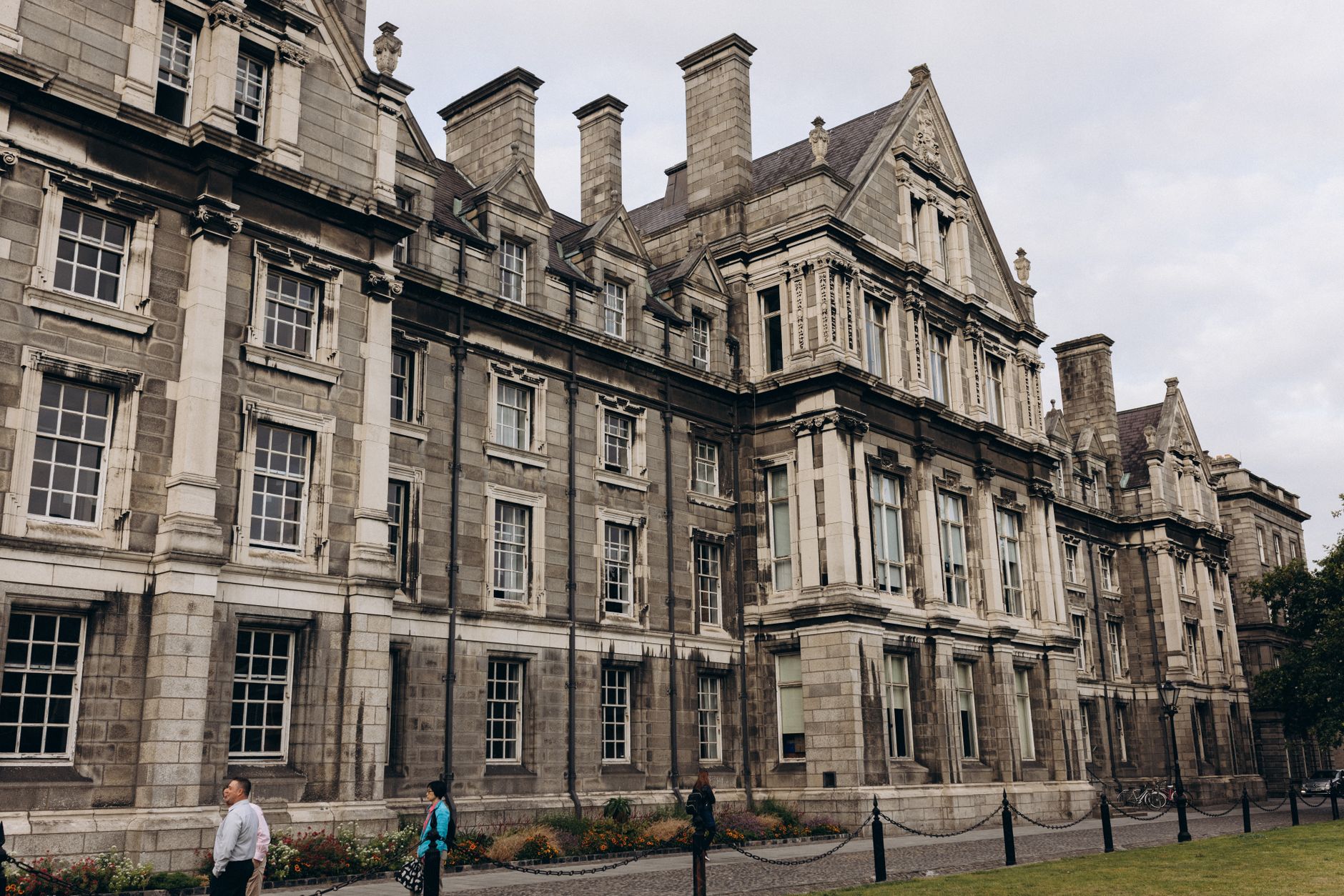
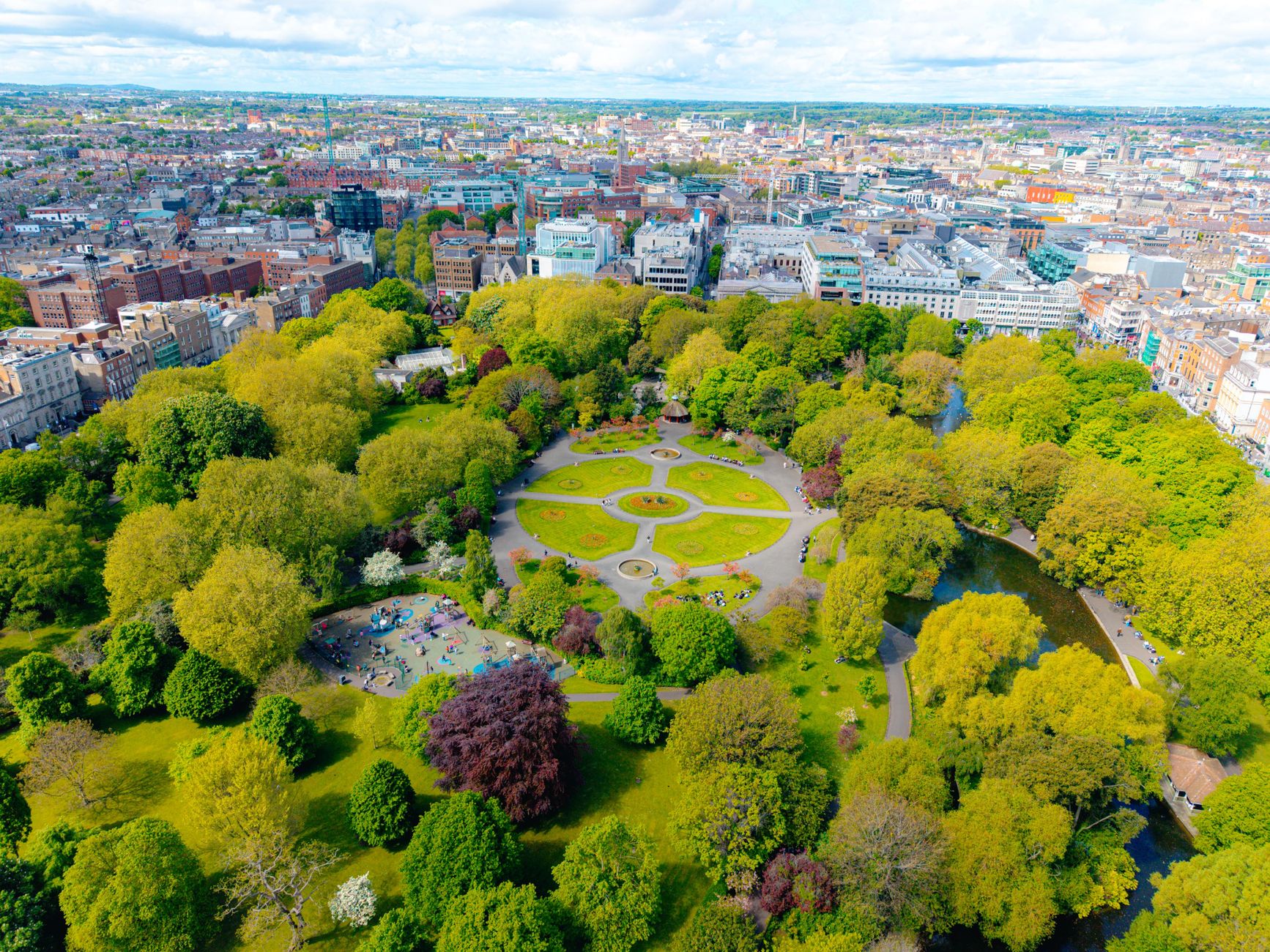
Georgian Dublin (Merrion Square) sits on the south-east edge of the city centre, a short walk from Trinity College and Grafton Street. The area is built around a handful of planned 18th-century squares and streets — Merrion Square itself, Fitzwilliam Square, and the wide terraces of Upper Merrion Street, Fitzwilliam Street and Baggot Street Lower. This is the Dublin of red-brick townhouses, fanlight doors, iron railings and quiet garden squares, laid out when the city was one of the wealthiest in the British Empire. It is compact and walkable, and much of it still reads as a residential neighbourhood rather than a tourist zone.
This area suits travellers who want calm, architecture and easy walking access to the centre, and who don’t mind paying a bit more for a proper room. It is good for couples, older visitors, and anyone who wants to come back to a quiet street after a day of walking. It is less good for people who want pubs on the doorstep, late-night noise or budget beds — the hostel-style options are limited here and the cheapest rooms sit near the edges, closer to Baggot Street and the canal rather than on the squares themselves.
By day the area is quietly busy: office workers crossing Merrion Square, tour groups pausing at the Oscar Wilde statue on its north-west corner, and locals walking dogs along the railings. By evening it empties out fairly quickly, and the streets around the squares become noticeably quieter than Temple Bar or Grafton Street. That is the trade-off: you get peace and a good night’s sleep, but you will walk ten or fifteen minutes for a lively pub or a late meal unless you head toward Baggot Street or the Grafton Street side.
The everyday life of the area is concentrated on Merrion Square, Fitzwilliam Square and the streets that connect them. Merrion Square Park is the obvious anchor, with its lawns, railings and the Wilde monument; Fitzwilliam Square is smaller and more residential, with a private garden in the middle. Georgian Dublin is also the city’s embassy and office quarter, so you will see a lot of suited people at lunchtime and a lot of locked doors in the evening. Architecture is the main draw: fanlights, door knockers and brickwork on Fitzwilliam Street and Merrion Square North are worth a slow walk.
Food here is more professional lunch than tourist trail. Baggot Street and the lower end of Merrion Street have a good spread of cafés, gastropubs and hotel restaurants, and the National Gallery and the museums around Leinster House have decent cafés for a daytime stop. Locals eat in the small cafés around Baggot Street and Fitzwilliam Street at lunch, and the area has a handful of well-regarded restaurants that fill up in the evening. For a wider choice, walk to Grafton Street and its side streets, where the range of places to eat is far greater.
Spring and early summer are the best times: the squares are in leaf, the days are long, and walking is comfortable. Autumn is also good, with fewer visitors and mild weather. Winter is dark by late afternoon but the streets are quiet and hotel rates often soften outside the Christmas period. Rain is possible in any month, so bring a waterproof jacket rather than an umbrella — Dublin wind makes short work of umbrellas. The area has no outdoor market scene of its own, so bad-weather days are best spent in the nearby museums and galleries.
Expect to pay premium prices here. This is one of the more expensive parts of central Dublin for hotels, with mid-range rooms commonly in the region of 180–280 euros (roughly 195–305 USD) a night and higher during major events or the summer peak. Cheaper options exist toward Baggot Street and the canal, but the true Georgian streets command a premium. Eating and drinking costs are similar to the rest of the city centre; a pub lunch or a café coffee is comparable to Grafton Street, and the hotel restaurants are at the upper end.
Before you arrive, know that the area is quiet at night and that many buildings are offices, so some streets feel empty after about seven in the evening. Parking is limited and expensive; most hotels offer paid parking or none at all, so ask before you book. The squares themselves are partly private, and Fitzwilliam Square’s garden is generally not open to the public. Book museum and gallery visits in advance if you are travelling in peak season, and expect some road works on Fitzwilliam Street from long-running utility projects.
The best streets to stay on are Merrion Square North and South, Fitzwilliam Street Upper, and the lower stretches of Baggot Street, all within a few minutes' walk of the park and the National Gallery. Merrion Square itself gives you the classic Georgian setting and the shortest walk to Trinity College and Grafton Street; Fitzwilliam Street is a little quieter and more residential. Baggot Street is livelier, with more cafés and pubs, and connects easily to the Grand Canal. Hotel types here run from small townhouse hotels in converted Georgian buildings to larger, more polished four- and five-star hotels around Merrion Street and Baggot Street. There is very little budget accommodation, so if you are watching costs, look toward the canal or the Grafton Street side. Quiet is the default: the squares and side streets are calm at night, and the noisier spots are on Baggot Street and near the main roads. Expect mid-range rooms at roughly 180–280 euros (195–305 USD) a night, with higher rates in summer and around major events; ask your host about parking, as it is scarce and often paid.
Things to do in Georgian Dublin (Merrion Square)
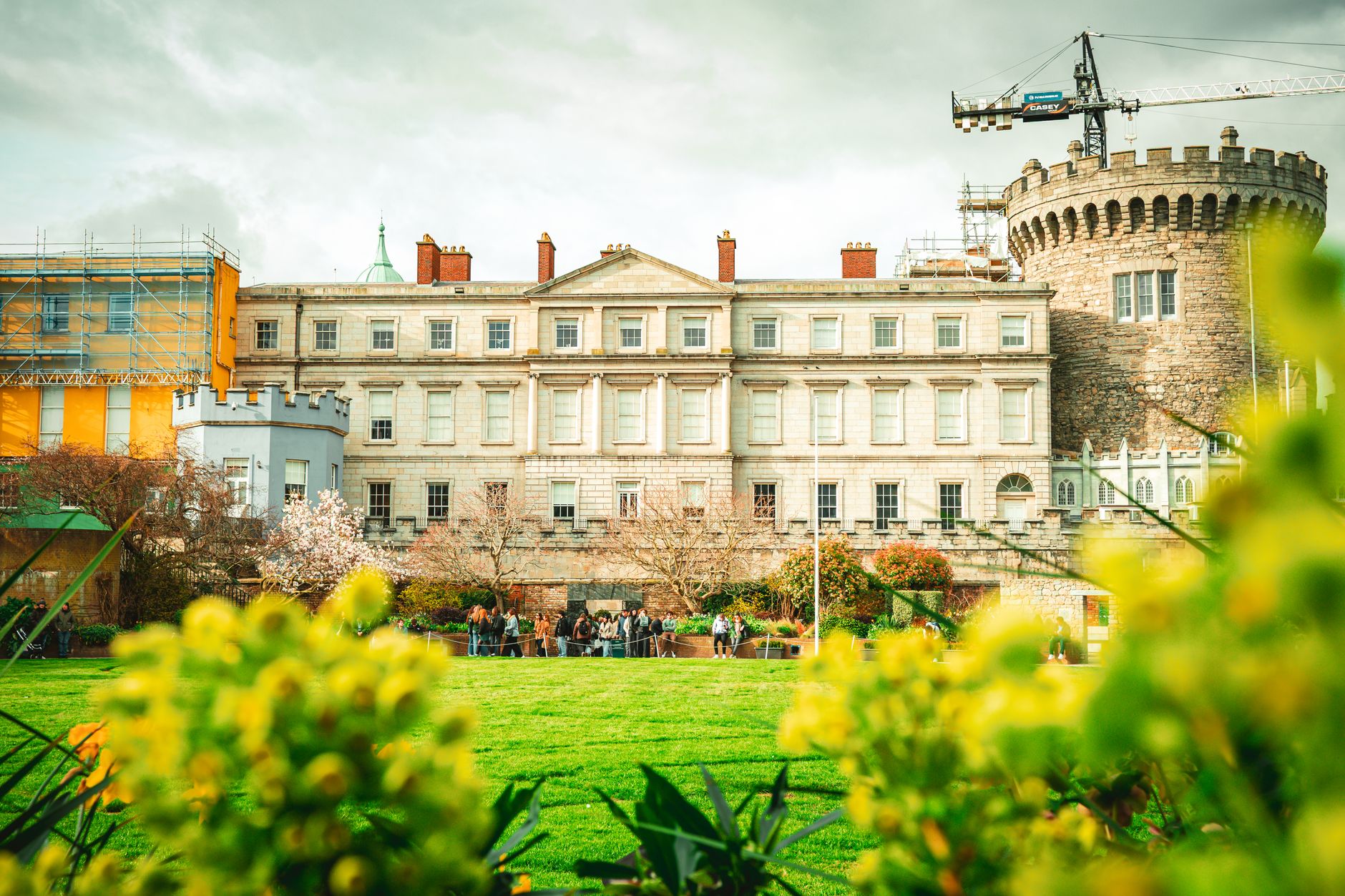
Merrion Square Park is the centrepiece of the area, a railed Georgian garden square with lawns, mature trees and the Oscar Wilde monument on its north-west corner. It is free to enter and a good place to start a walk. Go in the morning on a weekday for the quietest visit, and allow 20–30 minutes to walk the perimeter and read the monument. Bring a rain jacket rather than an umbrella, and check the park’s opening times locally, as they change with the season.

The National Gallery of Ireland sits just west of Merrion Square, close to Leinster House. It holds a strong collection of Irish and European painting and is a good wet-weather option. Entry to the permanent collection is generally free, though special exhibitions may be ticketed. Allow two to three hours, and go early in the day to avoid school groups. Check opening hours before you go, as they vary by day and season, and note that the gallery café is useful for a midday break.

The area’s real attraction is its architecture: fanlights, door knockers, brickwork and iron railings on Fitzwilliam Street, Merrion Square North and South, and the smaller streets in between. This is a free, self-guided walk. Go in the late afternoon when the light is softer and the streets are quieter, and give it about an hour. Bring a camera and look up at the upper windows and cornices — the detail is at eye level and above. Keep in mind that many buildings are private offices, so admire from the street.

Trinity College is a short walk west of Merrion Square and makes a natural half-day pairing. The campus is worth a wander for its cobbled squares and old buildings, and the Book of Kells exhibition draws most visitors. Book tickets in advance in peak season to avoid queues, and go early. Allow two to three hours if you are doing the exhibition and the campus. Bring your student card if you have one, as concessions are often available.

From the southern edge of the area, around Baggot Street and Fitzwilliam Place, you can pick up the Grand Canal and walk the towpath toward the Docklands or out toward Portobello. It is a flat, easy walk with swans and barges, and a good way to see a different side of the city. Go on a dry afternoon and allow an hour for a short stretch. Bring water and wear comfortable shoes, and be aware that parts of the towpath are shared with cyclists.

Baggot Street, running east from Merrion Square, has the area’s best concentration of cafés, gastropubs and restaurants. It is a practical stop rather than a destination in itself: good for a sit-down lunch, a coffee or an early dinner. Weekday lunch is the busiest and most reliable time. Allow an hour, and expect prices in line with central Dublin. If you want more choice, walk ten minutes to Grafton Street and its side streets in the evening.
What to see
Hotels near Georgian Dublin (Merrion Square)
No hotels are listed in Georgian Dublin (Merrion Square) yet. The nearest ones are on the region page.


Every hotel we cover in Georgian Dublin (Merrion Square)
- Sir John Rogersons Quay Penthouse 4★ · 5/5
- Gallery Quay 3★ · 4.8/5
- The Merrion 5★ · 4.7/5
- Staycity Aparthotels Dublin Mark Street 4★ · 4.7/5
- The Shelbourne Autograph Collection 5★ · 4.6/5
- Beckett Locke 4★ · 4.6/5
- Anantara The Marker Dublin A Leading Hotel of the World 5★ · 4.5/5
- Clontarf Castle Hotel 4★ · 4.5/5
- The Draper Rooms 3★ · 4.5/5
- Hilton Garden Inn Dublin City Centre 4★ · 4.4/5
- Lawlors of Naas 4★ · 4.4/5
- The Alex 4★ · 4.4/5
- The Leinster 4★ · 4.4/5
- Buswells Hotel 3★ · 4.4/5
- Travelodge PLUS Dublin City Centre 3★ · 4.4/5
- Trinity Townhouse Hotel 3★ · 4.4/5
- St Stephens Green Penthouse 4★ · 4.3/5
- The Davenport 4★ · 4.3/5
- The Gibson Hotel Dublin City 4★ · 4.3/5
- The Mayson Dublin 4★ · 4.3/5
- The Mont 4★ · 4.3/5
- The Spencer Hotel 4★ · 4.3/5
- Trinity City Hotel 4★ · 4.3/5
- Premier Inn Dublin Gloucester St South 3★ · 4.3/5
Getting around Georgian Dublin (Merrion Square)
The area is easy to reach from Dublin Airport: the most straightforward option is a taxi or app, which typically takes 25–45 minutes depending on traffic and costs a flat-ish metered fare in the region of 30–45 euros (roughly 33–49 USD) — confirm with the driver or app before you set off. Buses run from the airport to the city centre and take longer; from the central stops it is a 15–25 minute walk or a short taxi to the squares. Within the city, the area is served by buses along Merrion Street and Baggot Street, and the Luas tram lines stop nearby at St Stephen’s Green and on the north side of the city; from St Stephen’s Green it is a 10–15 minute walk. Driving is possible but parking is scarce and expensive, and many hotels have limited or no parking, so ask before you book. The area itself is very walkable: Trinity College, Grafton Street, the National Gallery and St Stephen’s Green are all within 5–20 minutes on foot. For longer trips, taxis and apps are easy to flag on Baggot Street and Merrion Street, and the city’s bike-share scheme has stations around the edges of the area.
Questions about Georgian Dublin (Merrion Square)
Yes, if you value quiet and architecture over nightlife. It is central enough to walk to Trinity College, Grafton Street and St Stephen’s Green in 5–20 minutes, and the streets are calm in the evening. The trade-off is fewer pubs and restaurants on the doorstep and higher hotel prices than areas like Temple Bar or O’Connell Street. For a first visit focused on sightseeing and good sleep, it works well.
Grafton Street is about a 10–15 minute walk west via Merrion Square and the top of the street. Temple Bar is roughly 20–25 minutes on foot, crossing the river at O’Connell Bridge or continuing along the south quays. Both are easy walks in good weather; in heavy rain, a short taxi is inexpensive. The area is compact, so most central sights are within half an hour on foot.
On-street parking in the Georgian streets is limited and often paid, with restrictions during weekday office hours. Some hotels have paid parking or a deal with a nearby car park; ask before you book, as spaces are not guaranteed. For a short stay, it is usually easier to arrive by taxi, bus or tram and walk. If you do drive, check the signs carefully, as clamping is enforced in central Dublin.
Merrion Square Park is a public park and is generally open during daylight hours, with seasonal changes; check locally. Fitzwilliam Square’s central garden is private and generally not open to the public, though you can walk the surrounding streets. Many of the townhouses are private offices or residences, so admire the facades from the street rather than trying doors. The Oscar Wilde monument on Merrion Square North is freely accessible.
Late spring and early summer are the nicest: the squares are green, the days are long and walking is comfortable. Autumn is also good, with fewer visitors and mild weather. Winter is quiet and dark by late afternoon, but rates often soften outside the Christmas period. Rain is possible in any month, so pack a waterproof jacket. If you are coming for a major event, book well ahead, as hotel prices in this area rise sharply.