Mountjoy Square
A faded but dignified Georgian square on Dublin's north inner city edge, quiet by night and central enough to walk almost anywhere.
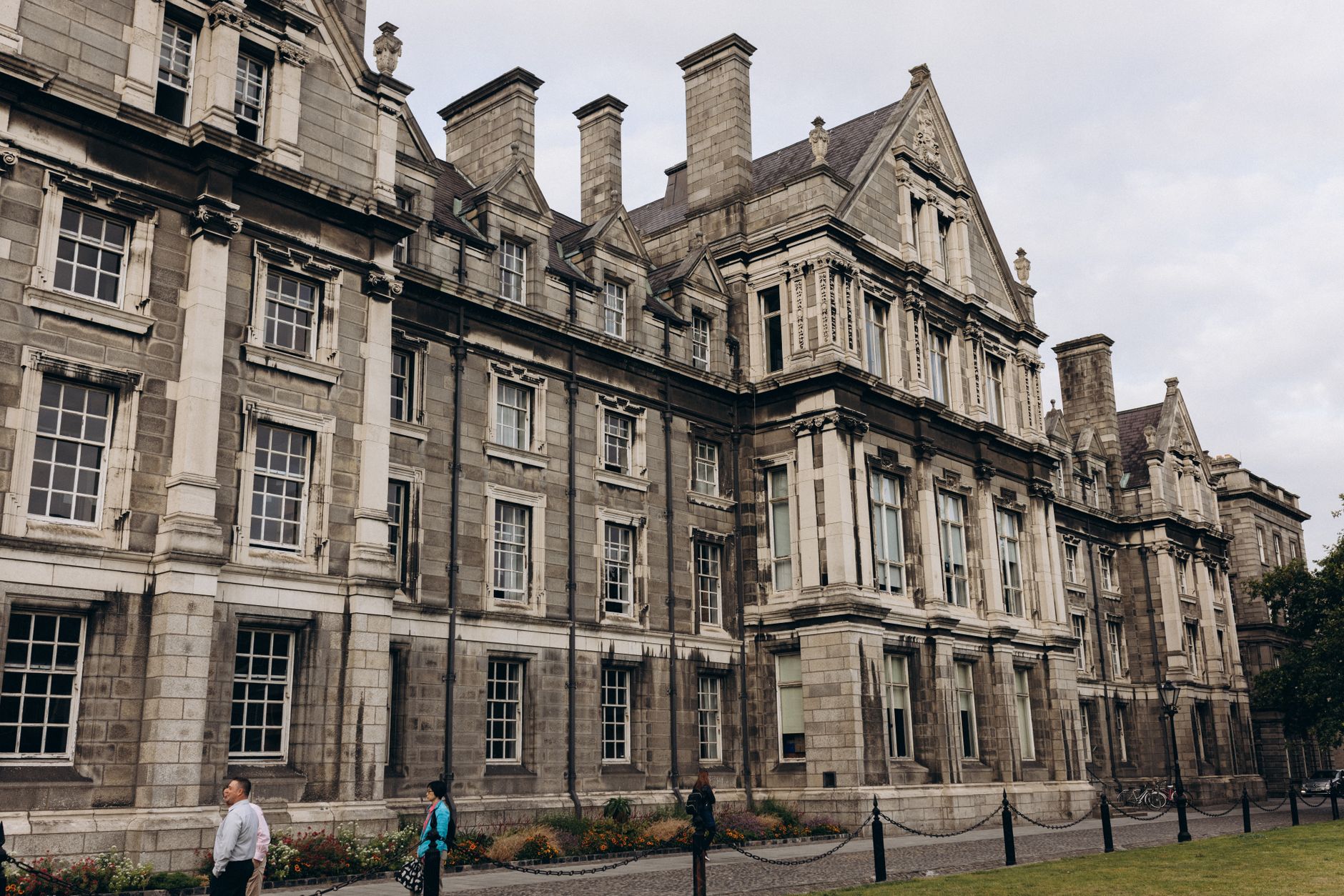
 The park at Mountjoy Square. Photo: The original uploader was Gavinmc at English Wikipedia ., Public domain, via Wikimedia Commons
Why people stay in Mountjoy Square
Mountjoy Square sits on the north inner city edge, roughly a ten-minute walk from O'Connell Street and the same again from the Mater hospital and the top of Gardiner Street. The square itself is a large, railed green space ringed by Georgian terraces, many of them restored, some still shabby. It was laid out in the late eighteenth century as one of Dublin's five original Georgian squares, and the streets around it — Gardiner Street, North Great George's Street, Hill Street and the lower end of Dorset Street — carry that same period architecture in varying states of repair. It is not a polished tourist quarter, and that is exactly the point.
This area suits travellers who want a genuine residential slice of the north inner city, a short walk from everything central, and who do not mind a slightly rough-around-the-edges street scene. It is good for solo travellers, couples and longer-stay visitors who value quiet nights and short commutes over curated charm. It does not suit anyone expecting picture-postcard Georgian Dublin with a boutique cafe on every corner, or families wanting a leafy suburban feel; for that, look south of the river or further out to Drumcondra or Clontarf.
By day the square and its streets feel ordinary and lived-in: buses grinding along Gardiner Street, people heading to work, students cutting through, a steady trickle of visitors walking up to the neighbouring heritage streets. Evenings are quieter than you might expect for a spot this central — traffic thins, the terraces close their doors, and the main noise comes from the buses and the occasional late-night group. It is a place to sleep well, not to go out; the nightlife is a short walk away in Parnell Square and beyond, not on your doorstep.
The landmarks are the ones you would not necessarily put on a postcard: the square's own railings and central green, the terraces along North Great George's Street with the James Joyce Centre, the wide sweep of Gardiner Street, and the sober institutional presence of the Mater hospital at the top of the road. Everyday life is corner shops and bus stops rather than destination dining. Walk ten minutes south and you are in the middle of O'Connell Street, ten minutes west and you are at Parnell Square and the Hugh Lane gallery.
Food around Mountjoy Square is functional and local: small groceries, takeaways and a scattering of casual spots along Dorset Street and Gardiner Street, none of which you would cross town for but all of which do the job for breakfast or a late bite. For a proper meal, locals head south towards Parnell Square, Capel Street or endlessly down to the city centre. There is no market scene here, so if food is your reason for choosing an area, this is a practical base rather than a gourmet one.
Dublin's weather is what it is in every neighbourhood: mild, damp, changeable, with rain possible in any month. Mountjoy Square handles it better than the tourist core because the streets are wide and the square gives you a bit of green to sit on in a dry spell. Spring and early autumn are the pleasantest times for wandering the Georgian streets. Summer brings longer evenings and more visitors but no dramatic change in temperature. Winter is grey and dark by late afternoon, but the area stays genuinely quiet and comfortable.
Costs here sit in the moderate band for Dublin: cheaper than the southside Georgian squares and the tourist core, but not a bargain district in the way some outer suburbs can be. Accommodation spans budget guesthouses and mid-range hotels with a few upscale options in converted period buildings; eating and drinking lean budget to mid-range, with a small number of smarter places nearby. Expect day-to-day costs, groceries and public transport to be broadly normal for the inner city rather than inflated by tourist footfall.
Before arriving, know that Mountjoy Square is residential and unusually quiet at night, which is a feature rather than a fault. Some side streets look scruffier than the square itself; judge the area by the square and the restored terraces rather than one dim corner. The nearest tram stop is a short walk south, and buses run constantly along Gardiner Street. Ask your host about the exact door and entry arrangements, since many of these are converted period buildings with staircases and no lifts.
The best places to stay are the terraces directly on and just off the square itself, and the restored Georgian stretch of North Great George's Street, where converted townhouses give you high ceilings, big windows and a real sense of period Dublin. This is the quietest part of the area: residential, low night-time traffic, and a genuine change of pace from the tourist core a short walk south. Accommodation here runs from budget guesthouses in older conversions to mid-range small hotels to the occasional upscale townhouse conversion with period detail intact; you are paying for character and location more than for facilities, so expect stairs, no lifts, and simpler bathrooms than a modern hotel. Towards Gardiner Street and Dorset Street the offering shifts toward mid-range and budget hotels and guesthouses, more convenient for buses and the hospital but noisier by day. The streets east of the square toward the Gardiner Street axis are busier and more workaday; the western edge, nearer to Parnell Square and the city centre, is a short walk from the museums and galleries and still remarkably calm after dark. If you want lively, this is not the area — nightlife means walking south or west. Ask about which floor you are on, whether there is a lift, and how the front door and entry system work, since many buildings are period conversions with shared stairs. Parking is limited and mostly on-street, so consider arriving without a car.
Things to do in Mountjoy Square
A slow circuit of the square and its immediate streets shows Dublin's Georgian town planning at a lived-in, unpolished pitch. Look at the doorcases, fanlights and brickwork along the restored stretches, and note how the square's central green is railed and private-looking but framed by public pavement. Best in the morning or early evening when the light is low and the traffic thinner; allow roughly an hour if you stop and look. Bring a rain jacket, since Dublin weather turns quickly.
This restored Georgian street just west of the square is one of the north inner city's best architectural walks, lined with handsome terraces and the James Joyce Centre in a period townhouse. It is worth it for the doorways, the sense of a street brought back from dereliction, and the literary context. Go on a weekday morning to have the pavement more or less to yourself; combine it with a wander down towards Parnell Square. Allow 45 minutes to an hour.
A ten-minute walk west brings you to the Hugh Lane Gallery, home to a fine collection of modern and Irish art and the reconstructed studio of Francis Bacon. It is worth it for the Bacon studio alone, which is displayed as it was left, and for a consistently strong programme of exhibitions. Go on a weekday afternoon when it is calm, and leave at least an hour and a half. Check the day's opening arrangements before you set out, as they vary.
The area's real advantage is walkability: from the square it is a straight run south down Gardiner Street and across the river to O'Connell Street and the shopping core, taking roughly fifteen to twenty minutes at an easy pace. Do it in the morning to see the city waking up, and stop at the bridges for the river views. Wear comfortable shoes and bring an umbrella; this is a practical walk rather than a scenic one, but it stitches you into the whole city.
A fifteen-minute walk west takes you to Capel Street and its surrounding lanes, one of the most genuinely mixed and lively stretches of the north city, with small shops, food spots and a steady local hum. It is worth it for the contrast with the quiet square and for the sense of a district in flux. Best on a weekday or Saturday morning; allow a couple of hours to wander and eat. Bring cash for small shops and keep an eye on opening days.
The top of the area, around the Mater hospital and the wide sweep of Gardiner Street, is not a conventional sight but rewards an architectural eye: institutional Dublin, church frontages and broad period streetscapes. It is worth a short walk if you are interested in how the Georgian city turned into the modern one. Go in daylight, keep it to half an hour, and treat it as a loop back to the square rather than a destination in itself.
What to see
Hotels in Mountjoy Square


Every hotel we cover in Mountjoy Square
- The Croke Park Hotel 4★ · 4.5/5
- Dublin One Hotel 4★ · 4.2/5
- The Address Connolly 4★ · 4.1/5
- Apartment Heart of Dublin City 4★
- Central Apartment Private patio reliable fast WIFI 4★
- Dublin Central Studios 4★
- Great Central Location 1BED APT Off OConnell ST 4★
- Maldron Croke Park 4★
- Molloy’s Apartments 4★
- Old Dublin Four Sisters 4★
- Parisian Style Dublin City Center Fast Wifi 4★
- The Address at Dublin 1 4★
- The Dubliner Central O Connell Street Zone 4★
- The Five Lamps Suites 4★
- The Synott Lodge 4★
- Charles St Serviced Accommodation 3★ · 4.8/5
- Dergvale Hotel 2★ · 4.4/5
- Sonder Mountjoy Square 3★ · 4.3/5
- Ripley Court Hotel 3★ · 3.7/5
- Mountjoy Serviced Accommodation 3★ · 3.6/5
- Yugo Kavanagh Court 3★ · 3.6/5
- Sherrard Street Studios 2★ · 3.1/5
- 1 Bedroom Central Dublin Apartment 3★
- 2 Bedroom Apartment Sleeps 3 In The City Centre 3★
Getting around Mountjoy Square
Mountjoy Square is served by buses rather than trams: the Luas Green Line stops at Parnell Square and Broadstone, both roughly ten to fifteen minutes on foot, and from there you can reach the city centre and beyond quickly. Buses run constantly along Gardiner Street and Dorset Street, connecting the area to O'Connell Street and the north city; a journey into the central shopping streets is a short ride or a fifteen to twenty-minute walk. From Dublin Airport, the most straightforward options are a taxi or app, typically thirty to forty-five minutes depending on traffic, or a bus into the city centre followed by a short walk or local bus. Driving is possible but unrewarding: on-street parking is limited and often restricted, and the one-way system around Gardiner Street takes getting used to, so unless you are heading out of the city, arrive without a car. Walking is the real transport here — the square is close enough to O'Connell Street, Parnell Square and the river that most visitors simply walk. The streets are flat and pavements are wide on the main roads, though side streets can be uneven. At night the area is quiet and well-lit on the main arteries; use the busier Gardiner Street route rather than dim back lanes, and use a taxi app if returning late. Ask your accommodation about nearby bus stops and the best walking route to the city centre, since the one-way streets can make the obvious route longer than it looks.
Questions about Mountjoy Square
It is a residential north inner city area and, like any city neighbourhood, it has scruffier corners and quieter stretches. The square itself and the main arteries such as Gardiner Street are busy and well-lit, and the area is notably quiet at night. Stick to the main streets after dark, avoid dim back lanes, and use a taxi app if you are returning late. Most visitors find it calm and unremarkable, which is exactly what you want from a base.
It is roughly a fifteen to twenty-minute walk south to O'Connell Street and the river, or a short bus ride along Gardiner Street. Parnell Square and the Hugh Lane Gallery are about ten minutes on foot to the west. The area is genuinely central by Dublin standards, which is why it works well as a base even though it does not feel like a tourist district.
The immediate streets are functional rather than foodie: small groceries, takeaways and casual spots along Dorset Street and Gardiner Street. For a proper meal, walk ten to fifteen minutes to Parnell Square or Capel Street, or head into the city centre. There is no market scene on the square itself, so treat the area as a practical base and eat out in the neighbouring districts.
Parking is limited and mostly on-street, often with restrictions and meters, and many buildings are period conversions without dedicated car parks. If you are arriving by car, ask your accommodation in advance about the nearest options. Unless you plan to leave the city, arriving without a car is far simpler, since the area is well served by buses and walkable to the centre.
This is a quiet residential area in the evening, and that is its selling point. For nightlife and restaurants, walk ten to fifteen minutes to Parnell Square, Capel Street or across the river into the centre. Locally you will find a few casual spots and takeaways but no real evening scene. Plan to go out elsewhere and come back to sleep — the streets are calm and the buses along Gardiner Street run late.